Tuesday, November 27, 2012

Tuesday, November 13, 2012
The Third Interview
Preparations for the interview
I conducted this interview with my American friend Lucas. He is the CA of the fourth floor of my dorm. Before the interview, I did the review of my last two interviews. I thought that I still had something need to prepare before my interview. I need to learn more about the country where my interviewee from. During the interview, I need to ask some more questions about his country and add it to the country report. I changed some of the 12 questions I prepared before. I think it is more suitable for this interview.
How Did You Approach People?
Lucas is one of the CA in my dorm. He is easy-going, when I first entered my dorm, he helped me to check in and brought my staff to my room. After that, we talked much about our each other. Until now, I have already gotten much help from him. We are good friend now.
When, where, and how did you Conduct the Interview?
I did the interview with Lucas on 9th November. He would go camping in the afternoon on that day, so we started the interview at 12:30p.m in his room. The interview took about 45 minutes. The day before our interview, we met at Atwood Center. I talked with him about my interview and asked what time is suitable for him to do the interview. He gave the time for me and we decided to meet at noon on Friday.
Country Report
I chose United States for my third interview because that this is the first foreign country I have been. I need to spend more than three years to complete my undergraduate study in United States. Actually, before I came here, I had learned lot about culture, history and geography of United States.
The United States of America is a federal constitutional republic consisting of fifty states and a federal district. The country is situated mostly in central North America, where its forty-eight contiguous states and Washington, D.C., the capital district, lie between the Pacific and Atlantic Oceans. At 3.79 million square miles and with over 314 million people, the United States is the third- or fourth-largest country by total area, and the third-largest by both land area and population. It is one of the world's most ethnically diverse and multicultural nations, the product of large-scale immigration from many countries. (1)
Geography
 |
| http://en.wikipedia.org/wiki/United_States |
The United States is the world's third or fourth largest nation by total area (land and water), ranking behind Russia and Canada and just above or below China. The ranking varies depending on how two territories disputed by China and India are counted and how the total size of the United States is measured: calculations range from 3,676,486 square miles (9,522,055 km2) to 3,717,813 square miles to 3,794,101 square miles. Measured by only land area, the United States is third in size behind Russia and China, just ahead of Canada.(2)
Language
English is the defacto national language. Although there is no official language at the federal level, some laws—such as U.S. naturalization requirements—standardize English. In 2010, about 230 million, or 80% of the population aged five years and older, spoke only English at home. Spanish, spoken by 12% of the population at home, is the second most common language and the most widely taught second language. Some Americans advocate making English the country's official language, as it is in at least twenty-eight states. (3)
Religion
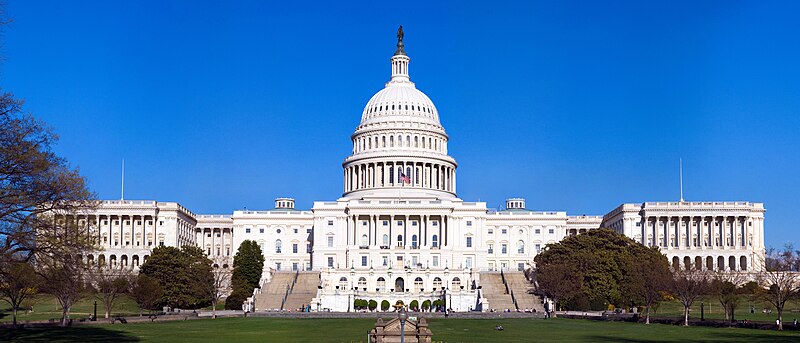 |
| http://en.wikipedia.org/wiki/File:Capitol_Building_Full_View.jpg |

The United States is officially a secular nation; the First Amendment of the U.S. Constitution guarantees the free exercise of religion and forbids the establishment of any religious governance. In a 2002 study, 59% of Americans said that religion played a "very important role in their lives", a far higher figure than that of any other wealthy nation. According to a 2007 survey, 78.4% of adults identified themselves as Christian, down from 86.4% in 1990. (4)
Interview report
This is my third interview. This time, I tried my best to do the preparation. During the interview, I got the answers of my 12 questions and at the same time, I asked my interviewee some questions about his country. I also recorded it into country report. From the interview, I learned much not only from the resource but also from my interviewee. I like America more and want to make more American friends due to this nice interview.
Transcript
ZeYu Chen ( Z )
Lucas ( L )
Z: Hi Lucas. How is your going today?
L: I`m pretty good. How about you?
Z: I got cold yesterday. The temperature dropped so quickly that I could not adapt it.
L: Oh, you need to wear more and take care yourself.
Z: Thanks for you remind. So, can we start our interview?
K: Sure.
Z: Can you tell me your full name?
L: My name is Lucas Golliet.
Z: Where are you from in America?
L: I`m from Coon Rapids in Minnesota.
Z: When is your birthday?
L: It`s 25th July.
Z: What is your major?
L: My major is Management and I`m a senior here.
Z: It means that you will be graduate in next semester?
L: Yes if it is fluky.
Z: I think you will be cause I know you are hard-working,
L: Ahh, I hope so.
Z: What do you usually do when you are free?
L: I like doing organizations, playing Ping-pang,golf and hanging with friends.
Z: I also like playing Ping-pang. You know Ping-pang is popular in China. In primary school, we often play Ping-pang in PE class.
L: Really? We can play it together someday.
Z: OK, we can reserve the time after the interview. Why you choose the St.Cloud State University?
L: Because I know that St.Cloud State University is the biggest state university in Minnesota and lots of my friends also chose it.
Z: That`s cool. It `s suitable for you. What courses do you take this semester?
L: I take Blaw 436, Blaw 438, SOC 456 and CMST 330.
Z: Umm, all of these courses are in high level. I think they are difficult.
L: Yes, they are really tough. But if you spend enough time on them, I think it will not be extremely hard.
Z: Yeah, that`s why you always hard-working. I often see you study in meeting room.
L: Yes, I think the living room it`s the place for sleeping and relaxing. If I need to study, I will go to library or the meeting room.
Z: Can you tell me about activities that young people like to do in America?
L: I think most youth like doing some sports during free time, such as basketball. Also, some of them like playing TV games or online games, sometimes we like hanging out with friends or have a party.
Z: Actually, I have seen some youth from America in our dorm do something boring I think. They just played flying disk. One of them throw the disk and the other one try to catch it. In my opinion, I think it is really boring, but I know it is a kind of sport. It just like running.
L: Yeah, I think so too. But if you play with your best friend and you can make scoring just like a match. For example, you can decide the people who loss the match will drink one bottle of beer. Oh, both of you must under 22. I think that will be interesting.
Z: That`s a good idea! I will try it. This is my second year in America. Before I went there, I heard about something about that some native American refuse Asian people and maybe have discrimination on Chinese. Did you see it before?
L: In fact, many years ago, maybe it happened in some parts of America. But now, with the development of economic, people gradually accepted people from anywhere. I never saw the discrimination nowadays.
Z: Yeah, actually I agree with you. I think Americans are really kind to people from foreign countries, such as you. Haha.
L: Yeah, sure.
Z: Can you tell me one goal for the year for you?
L: I hope to become good friends with all of you!
Z: What do you mean by" all of you"? Who?
L: I mean you, who lived in Lawrence Hall.
Z: Oh, I think you almost accomplish your goal now.
L: Yeah, that`s what I hope to.
Z: What are the majority holidays in America?
L: I think Thanks Giving Day,and Christmas are the majority holidays here.
Z: How did Americans often celebrate them?
L: During Thanks Giving Day, we always stay with our family and cook turkey. On Christmas, we usually go shopping and place some Christmas trees in our home. For some people who in different religion, they have different celebration.
Z: That`s great. I think the Thanks Giving Day is same as the Mid-Autumn Festival and it is coming soon!
L: Yes. You can enjoy your holiday.
Z: What is the traditional food in America?
L: Turkey, steak and hamburger.
Z: I think so too. They are really different from them in China. What is the majority religion in your country'?
L: It`s Christian. I also believe that. From the research, more than 60% of adults in U.S are Christian.
Z: Yes, it close to the research from Internet.
Z: Alright, is there anything your want to add or do you have anything to ask me?
L: No. We gonna finish the interview?
Z: Yeah, it takes about 40 minutes now.
L: Oh, I don`t feel that. I feel so happy to talk with you that I don`t care time.
Z: Me too. Thanks for your time. I need to do some modification on my record paper.
L: Hmm, I need to prepare for my camping tonight. See you!
Z: See you. Enjoy your camping!
Reference:
(1) http://en.wikipedia.org/wiki/United_States 11/12/2012.
(2) http://archives.starbulletin.com/1999/10/18/special/story4.html 11/12/2012.
(3) http://www.nps.gov/archive/jeff/lewisclark2/circa1804/heritage/louisianapurchase/louisianapurchase.htm. 11/12/2012.
(4) http://www.adfl.org/resources/enrollments.pdf 11/12/2012.
Tuesday, November 6, 2012
The Second Interview
Preparations for the interview
How Did You Approach People?
The first time I met him is in the gym in our school. One of my friend asked me to play basketball with people whom from many different countries. Kita is one of them. During the basketball match, we were in the same team and we did the perfect teamwork and I thought he played basketball very well, so I thought we have the same hobby. After the basketball match, we chatted with each other about lots of things until night.
When, where, and how did you Conduct the Interview?
I did the interview with Kita on 2ed Nov. Before we started the interview, we went to play basketball together and had dinner. After the dinner, we went to the coffee shop in library and started my interview.
Country Report
I choose Japan for my interview because that Japan located nearby China and I usually heard something and watched movies, cartoons from Japan.
Japan is an island nation in East Asia. Located in the Pacific Ocean, it lies to the east of the Sea of Japan, China, North Korea, South Korea and Russia, stretching from the Sea of Okhotsk in the north to the East China Sea and Taiwan in the south. The characters that make up Japan's name mean "sun-origin", which is why Japan is sometimes referred to as the "Land of the Rising Sun".(1)
History
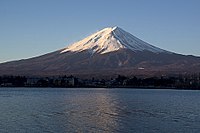 |
| http://zh.wikipedia.org/wiki/%E6%97%A5%E6%9C%AC |
A Paleolithic culture around 30,000 BC constitutes the first known habitation of the Japanese archipelago. This was followed from around 14,000 BC (the start of the Jōmon period) by a Mesolithic to Neolithic semi-sedentary hunter-gatherer culture, who include ancestors of both the contemporary Ainu people and Yamato people, haracterized by pit dwelling and rudimentary agriculture.
During the 16th century, traders and Jesuit missionaries from Portugal reached Japan for the first time, initiating direct commercial and cultural exchange between Japan and the West. The Empire of Japan invaded other parts of China in 1937, precipitating the Second Sino-Japanese War (1937–1945).
In 1947, Japan adopted a new constitution emphasizing liberal democratic practices. The Allied occupation ended with the Treaty of San Francisco in 1952 and Japan was granted membership in the United Nations in 1956. Japan later achieved rapid growth to become the second-largest economy in the world, until surpassed by China in 2010. This ended in the mid-1990s when Japan suffered a major recession.(2)
Geography
 |
Japan has a total of 6,852 islands extending along the Pacific coast of East Asia. The country, including all of the islands it controls, lies between latitudes 24°and 46°N, and longitudes 122° and 146°E. The main islands, from north to south, are Hokkaidō, Honshū, Shikoku and Kyūshū. The Ryūkyū Islands, including Okinawa, are a chain to the south of Kyūshū. Together they are often known as the Japanese Archipelago.(3)
Environment
In the period of rapid economic growth after World War II, environmental policies were downplayed by the government and industrial corporations; as a result, environmental pollution was widespread in the 1950s and 1960s. Responding to rising concern about the problem, the government introduced several environmental protection laws in 1970. The oil crisis in 1973 also encouraged the efficient use of energy due to Japan's lack of natural resources. Current environmental issues include urban air pollution (NOx, suspended particulate matter, and toxics), waste management, water eutrophication, nature conservation, climate change, chemical management and international co-operation for conservation.
Japan is one of the world's leaders in the development of new environment-friendly technologies, and is ranked 20th best in the world in the 2010 Environmental Performance Index. As a signatory of the Kyoto Protocol, and host of the 1997 conference which created it, Japan is under treaty obligation to reduce its carbon dioxide emissions and to take other steps to curb climate change.(4)
Religion
Japan enjoys full religious freedom based on Article 20 of its Constitution. Upper estimates suggest that 84–96 percent of the Japanese population subscribe to Buddhism or Shinto, including a large number of followers of a syncretism of both religions. However, these estimates are based on people affiliated with a temple, rather than the number of true believers. Other studies have suggested that only 30 percent of the population identify themselves as belonging to a religion. According to Edwin Reischauer and Marius Jansen, some 70–80% of the Japanese regularly tell pollsters they do not consider themselves believers in any religion.
Nevertheless, the level of participation remains high, especially during festivals and occasions such as the first shrine visit of the New Year. Taoism and Confucianism from China have also influenced Japanese beliefs and customs. Japanese streets are decorated on Tanabata, Obon and Christmas. Fewer than one percent of Japanese are Christian. Other minority religions include Islam, Hinduism, Sikhism, and Judaism, and since the mid-19th century numerous new religious movements have emerged in Japan.(5)
Culture
Japanese culture has evolved greatly from its origins. Contemporary culture combines influences from Asia, Europe and North America. Traditional Japanese arts include crafts such as ceramics, textiles, lacquerware, swords and dolls; performances of bunraku, kabuki, noh, dance, and rakugo; and other practices, the tea ceremony, ikebana, martial arts, calligraphy, origami, onsen, Geisha and games. Japan has a developed system for the protection and promotion of both tangible and intangible Cultural Properties and National Treasures. Sixteen sites have been inscribed on the UNESCO World Heritage List, twelve of which are of cultural significance.(6)
Interview report
This is my second interview, as a result, I have much more experience this time. Also, Kita is very easy-going, everyone can approach him easily. We spent about 40 minutes on this interview. Of course, we finished my 12 questions which I have already listed in the last blog. At the same time, I asked him some questions which I am really interested in, it`s about the cartoons in Japan. I think this interview was going well as I expected before. We talked arbitrary during the interview. I learned much from him.
Transcript
ZeYu Chen( Z )
Z: Hey Kita, did you enjoy your dinner?
K: Yeah, sure. I like the food in Fuji. It makes me recall my home.
Z: Oh, that`s very nice. So, can we start our interview?
K: Yes. Let`s start it.
K: My name is Kita. K-I-T-A and I can write my Japanese name for you. ( write down on my paper)
Z: Ahh, it looks strange for me. Could you tell me something about yourself? Such as your hometown, your hobbies, your major and so on.
K: I am from the east of Japan called Tokyo. It is the capital of Japan.
Z: Yeah, I know it. It is famous in China. I think most of Chinese know this beautiful city.
K: Yeah, I think so too. I am a senior the Tokyo university and I am a exchange student here. I like playing basketball and I am pg in my basketball team of my school. My major is International Business.
Z: Some of my friends also take this major. I think it`s popular right now.
K: Yeah, I think it is also an easier major for me.
Z: What do you usually do during free time?
K: I often play basketball with my friends in gym including you.
Z: Yes, I`d like to too. Actually, I don`t like to play basketball with some of my Chinese friends cause that I think they are too serious. For our daily relax and excise, I think we could just play happily and don`t get hurt.
K: I agree with you.
Z: And in your hometown, what do you usually except study?
K: Sometimes I go to some bar to see the basketball match and sometimes I go shopping with my girlfriend.
Z: Oh, you have a girlfriend in your hometown? Long-distance love is a tough problem I think.
K: Yes, sometimes we have some problems.
Z: I hope you can deal with these problems well.
K: Thanks.
K: Because St. Cloud State University has a good environment, I saw many pictures on the Internet before I arrived here and one of my friend study here. He recommend me to chose this university.
Z: What courses do you take this semester?
K: I take Econ205, COB and Math196. I also take some ESL classes. I have 16 credits this semester.
Z: So, you are the exchange student right? Will you go back to the university of Tokyo next year?
K: Yes, the plan of exchange student in Japan is usually for one year.
K: Actually, I don`t know it right now. Maybe I will try to find a job during my last semester in the university.
K:Haha, thanks. I think I will do the plan when I finish this exchange year.
Z: Is this the first time you go to a foreign country? How do you think about this city?
K: Yeah, this is my first time to leave my hometown. I felt worry about that when I left Japan because of the language problem. But when I arrived here, I find everything seemed good. I did not need to worry about anything expect the food. I think everything here is good except the food. That`s why I often go to Fuji even though it is expensive.
Z: Can you tell me about activities that young people like to do in your country?
K: In my hometown, most boys like doing some sports during free time, such as soccer ball. Also, they like watching comic books or some cartoons. Such as "One piece", "Bleach".
Z: Oh yeah! I like them too! My next question is about the cartoon in Japan.
K: Really? What`s your favourite cartoon?
Z: My favourite one is "One piece". It`s very popular all over the world. Can you tell me how did the cartoon developed in Japan? I saw the cartoon from Japan when I was very young and I almost saw 20 or more cartoons from Japan until now.
K: Actually, I don`t know it very clearly. I just can tell you vaguely.
Z: That`s OK. I don`t want to be a pro in Japanese cartoon.
K: Haha, of course. Japan is a comic big country. Japanese comics industry began to develop from the 12th century. Heian period "Animals and Birds opera painting is considered to be Japan's oldest comic. In 1862, the comic magazine "Japan punch" in Yokohama foreigners residency issue. 1877's show that the inaugural issue of the comic magazine "round and round tidbit" of the colonial era. World War II because the Japanese war, plus due Intelligence Agency regulations and paper, Japanese comics industry recession. After World War II, the Japanese manga industry resumed again angry. Monthly girls comic magazine "Nakayoshi" founded in 1954. In 1959, the first weekly comic magazine "Weekly Shonen Sunday and Weekly Shonen Magazine" was founded. Weekly Shonen Jump "founded in 1968. The early postwar period affected the history of modern Japanese comics representative works of Osamu Tezuka's "Astro Boy". After the 1950s, more and more Japanese cartoonist inspired by Osamu Tezuka works. In the 1960s,, Ishimori Shotaro Akatsuka Fujio Fujiko Fujio works popular. With the rapid development of television, popular comic big screen, the Japanese began animation era. 1990s, the type of comics to further expand, the rapid growth in the number of comics magazines, network cartoons culture came into being.
Z: Hmm, for me. "Slam Dunk","Dragon Ball" are the first cartoon I approach from Japan.
K: Yeah, I also like them very much.
Z: Thank you for spending so much time tell me the history of Japanese cartoon. I am really interested in it.
K: You are welcome. If you like, I have some comic books from my hometown. I can give those to you for gifts.
Z: Oh really? Thanks! Don`t wait, we move to get it now.
K: Are you serious?
K: In Japan, New Year`s Day is the most important. We always have a long holiday during it.
Z: How did you celebrate the New Year?
K: I think it is same as China. Our family always meet with each other and have a dinner together.
Z: Yeah, in China, we also do the same thing during New year. But it`s Chinese New Year. We seldom celebrate on 1st January. What do you usually eat for your festival?
Z: Yeah, I also like the Japanese food. Alright, is there anything your want to add before we finish our interview?
K: No.
Z: Do you have some questions for me?
K: No.
Z: OK, thanks for your time and I think you are tired right now.
K: Yeah, we played basketball for a whole afternoon.. Both of us need rest now.
Z: Yes, I am going to sort out the note of this interview and then take a rest.
K: So, I will go back to my dorm now. See you later.
Z: See you.
Reference:
(2)"Tokyo says it will bring troops home from Iraq". International Herald Tribune. 20 June 2006. http://www.iht.com/articles/2006/06/20/news/japan.php. Retrieved 28 March 2007.
(3)"Standard Country and Area Codes Classifications". UN Statistics Division. 1 April 2010. http://unstats.un.org/unsd/methods/m49/m49regin.htm#asia. Retrieved 16 July 2010.
(4)"Japan". US Department of State. http://www.state.gov/r/pa/ei/bgn/4142.htm. Retrieved 16 January 2011.
(5)"World Population Prospects". UN Department of Economic and Social Affairs. Archived from the original on 21 March 2007. http://web.archive.org/web/20070321013235/http://esa.un.org/unpp/. Retrieved 27 March 2007.
(6)"Culture and Daily Life". Embassy of Japan in the UK. Archived from the original on 17 March 2007. http://web.archive.org/web/20070317192109/http://www.uk.emb-japan.go.jp/en/facts/culture_dailylife.html#sports. Retrieved 27 March 2007.
Tuesday, October 23, 2012
Best interview.
My best interview is Carroll-Anderson, Nicholas S. 20 points.
His address is http://en191f12s28nickca.blogspot.com/2012/10/interview-1.html .
I think his interview is the best because that he describe all of the steps very clearly. I can easily find every step he did before, during and after the interview. He conducted the interview with a Chinese girl. As he wrote in his blog, I can imaged they felt relaxed to talk with each other. He finished his quesitons and also asked some questions he is interested maybe.
My second best interview is Galkina, Elena V. 19 points.
Her address is http://elenaen191f12s28.blogspot.com/2012/10/first-interview.html
I chose this for my second best interview. Her interview include many interesting things. She also put some pictures in the country report. I think it is good for people to understand it. During her preparation, she chose 12 core questions and she added and made a little change on them. Before she started the interview, she tried to know more about her interviewee. I think I can learn from her in this point.
My third best interview is Xu, Bing Zhe. 18 points.
His address is http://en191f12s28bingzhe.blogspot.com/2012/10/my-frist-interview.html
I think his interview is perfect. The only thing I think he did not do well is the interview report. He finished his 12 questions and I can know much more from his interview.
His address is http://en191f12s28nickca.blogspot.com/2012/10/interview-1.html .
I think his interview is the best because that he describe all of the steps very clearly. I can easily find every step he did before, during and after the interview. He conducted the interview with a Chinese girl. As he wrote in his blog, I can imaged they felt relaxed to talk with each other. He finished his quesitons and also asked some questions he is interested maybe.
My second best interview is Galkina, Elena V. 19 points.
Her address is http://elenaen191f12s28.blogspot.com/2012/10/first-interview.html
I chose this for my second best interview. Her interview include many interesting things. She also put some pictures in the country report. I think it is good for people to understand it. During her preparation, she chose 12 core questions and she added and made a little change on them. Before she started the interview, she tried to know more about her interviewee. I think I can learn from her in this point.
My third best interview is Xu, Bing Zhe. 18 points.
His address is http://en191f12s28bingzhe.blogspot.com/2012/10/my-frist-interview.html
I think his interview is perfect. The only thing I think he did not do well is the interview report. He finished his 12 questions and I can know much more from his interview.
The First Interview
ZeYu Chen
English 191
10/23/2012
The First Interview
Preparations for the interview
In order to do my first interview with my Korea roommate, Jin. He is 24 years old and he lived in south of Korea. I worked out 12 questions for him and reserved a suitable time with him. Before the interview, I also do lots of research on Internet about Korea. At the same time, I asked one of my friends whom lives in Korea now about Korean people daily life and if anything specially for us in Korea. I also prepared a sound record for my interview.How Did You Approach People?
I did the interview with my roommate. The relationship between is good, so he received my request of interview immanently.When, where, and how did you Conduct the Interview?
I did the interview with Jin on 20th Oct. Before the interview, I reserved a time with him and he showed me some videos about the history and culture of Korea. I think these are helpful for my learning about Korea. At our reserved time, I invited him to the meeting room in our dorm and we sit face to face.Country Report
I also choose Korea for my interviewee because that my roommate is from Korea and there is a very popular Korean song called "Gangnam style". " On the other hand, there are so many popular electronic products made by Korea, such as "Sam-sum". I hope to learn that how they make these and how they developed so far.Geography
Korea is an East Asian country that is currently divided into two separate sovereign states, North Korea and South Korea. Located on the Korean Peninsula, Korea is bordered by China to the northwest and Russia to the northeast. It is separated from Japan to the east by the Korea Strait and the Sea of Japan (East Sea), and it is separated from Taiwan to the south by the East China Sea."(1)Language
"Korean is the official language of both North and South Korea, and (along with Mandarin) of Yanbian Korean Autonomous Prefecture in Manchuria area of China. Worldwide, there are up to 80 million speakers of the Korean language. South Korea has around 50 million speakers while North Korea around 23 million. Other large groups of Korean speakers are found in China (around 1.8 million speakers), the United States (around 900,000 speakers), the former Soviet Union (around 350,000), Japan (around 700,000), Canada (100,000), Malaysia (70,000) and Australia (150,000). It is estimated that there are around 700,000 people scattered across the world who are able to speak Korean because of job requirements (for example, salespersons or businessmen with Korean contacts), marriages to Koreans or out of pure interest in the language." (2)Culture
"In ancient Chinese texts, Korea is referred to as "Rivers and Mountains Embroidered on Silk" (금수강산, 錦繡江山) and "Eastern Nation of Decorum" (동방예의지국, 東方禮儀之國).[60] Individuals are regarded as one year old when they are born, as Koreans reckon the pregnancy period as one year of life for infants, and age increments increase on New Year's Day rather than on the anniversary of birthdays. Thus, one born immediately before New Year's Day may only be a few days old in western reckoning, but two years old in Korea. Accordingly, a Korean person's stated age (at least among fellow Koreans) will be one or two years more than their age according to western reckoning. However, western reckoning is sometimes applied with regard to the concept of legal age; for example, the legal age for purchasing alcohol or cigarettes in the Republic of Korea is 19, which is measured according to western reckoning." (3)Religion
“According to 2005 statistics compiled by the South Korean government, about 46% of citizens profess to follow no particular religion. Christians account for 29.2% of the population (of which are Protestants 18.3% and Catholics 10.9%) and Buddhists 22.8%.Islam in South Korea is practiced by about 45,000 natives (about 0.09% of the population) in addition to some 100,000 foreign workers from Muslim countries.” (4)
Education
“The modern Korean school system consists of six years in elementary school, three years in middle school, and three years in high school. Students are required to go to elementary and middle school, and do not have to pay for their education, except for a small fee called a "School Operation Support Fee" that differs from school to school. The Programme for International Student Assessment, coordinated by the OECD, currently ranks South Korea's science education as the third best in the world and being significantly higher than the OECD average.” (5)Interview report
This is my first time to do a interview. I think it was going well with my hard work. I prepared 12 questions for this interview. When I did the interview, I did not feel nervous and I spoke fluently enough I think. In case of this interview, I think I did it well because that this interview was between my roommate and me. I chatted with him everyday, so I never felt shy. During the interview, I also talked something I was interested in about Korea with him without that 12 questions. I felt that it was good for me to learn about Korea and approach my goal to chose Korea for my interview.Transcript
ZeYu Chen( Z )
Z: See you.
Reference:
(1) Korean Map, The People's Korea, 1998. (2) http://baike.baidu.com/view/3299.htm
(4) "OECD.org" (PDF). http://www.oecd.org/dataoecd/42/8/39700724.pdf. Retrieved 2012-05-21.
Monday, October 22, 2012
Challenges and benefits of interviewing an international student
People always have different mind with each other. We never think about anything and get the same answers. So during our interviews, we may learn much knowledge. At the same time, if we do a interview with people who are from other country with ourself, we should pay more attention on some sensitive problems.
Actually this is my first time to interviewed people in other countries. I feel a little nervous when I do an interview, because I have some new challenges, respondents are asked. Sometimes difficult to find an international student, who is the interview for you.
In addition, the language barrier is also in the interview, I think I will face a major problem. The number of international students can not speak fluently English, so they may not be able to understand what we are talking about. International students may shy in public places with you, these people can not be heard, because of the different cultures. On the other hand, some of the sensitive issues should be avoided, such as religion, race issues and sovereign rights.
When we do this interview, we can get much benefit. As we first meet international students, we can become very good friends now. In the ensuing days, you can stay with for a long period of time to communicate, you can learn a new culture from his. From the interview, we can learn their traditional food, customs and way of life. In addition to learning the culture, we can learn from their education.
In conclusion, international students` interviews will make many challenges and benefits. It is a great way to learn more knowledge, and make new friends. We need to try our best to use this opportunity.
Subscribe to:
Posts (Atom)